
Men are more likely to get melanomas on the back (around 41%). It is also a difficult place to spot one. Not very dramatic, but different to other …
Suspicious mole on back
Men are more likely to get melanomas on the back (around 41%). It is also a difficult place to spot one. Not very dramatic, but different to other …
Suspicious mole on back

This is an archive case. I’m planning to post more cases this year-this blog was originally aimed at medical professionals, but my ongoing clinical …
New, changing mole is cancer
Basal cell carcinomas…
Just read a really nice international study on identifying BCC (basal cell cancer) sub-types in the January 2021edition of the Journal of the European Academy of Dermatology and Venereology (JEADV). An abstract can be read here by non subscribers https://onlinelibrary.wiley.com/doi/abs/10.1111/jdv.16597
BCC is generally thought of as not a dangerous cancer as, unlike melanoma, it seldom metastasises. However, once it has begun, it never stops growing and can make deeply penetrating ulcers which scab, bleed, grow, never heal and, given enough time, will destroy underlying structures and cause serious harm. They can cause blindness by infiltrating into an eye, and death may eventually result, for example by ulcerating into a major blood vessel or the brain. It is therefore worth making the effort to diagnose BCCs early, especially in the head and neck, even if only to get smaller scars and smaller surgeon’s bills.

View original post 500 more words
Important message here, lack of itching does not exclude a serious diagnosis. Thank you for another informative case.
This mole had been growing and changing for a few years, and there was no other mole on the patient’s skin. This should have sounded warning bells, but she wasn’t worried because it didn’t itch. And itching is an important feature of skin cancer, isn’t it? NO IT ISN’T. I have been working in this field for 20 years and learned from many of the world’s best experts, attending their lectures, reading their books, even sitting in on some of their clinics. Melanomas DO NOT as a rule itch. It’s what they look like that worries us, not what they feel like. Many people also assume that skin cancers are painful. They aren’t (with the exception of a proportion of some squamous cell cancers, but they are easy to diagnose as they grow so fast).
Here is the ‘mole’ as presented to the doctor, several years after it…
View original post 145 more words
Not an uncommon lesion, a nice example of a reticular network in a junctional naevus. Often patients ask to have these removed, replacing a benign lesion with a scar.
During a routine skin check, a mole was noticed that was larger and darker than the person’s other moles.
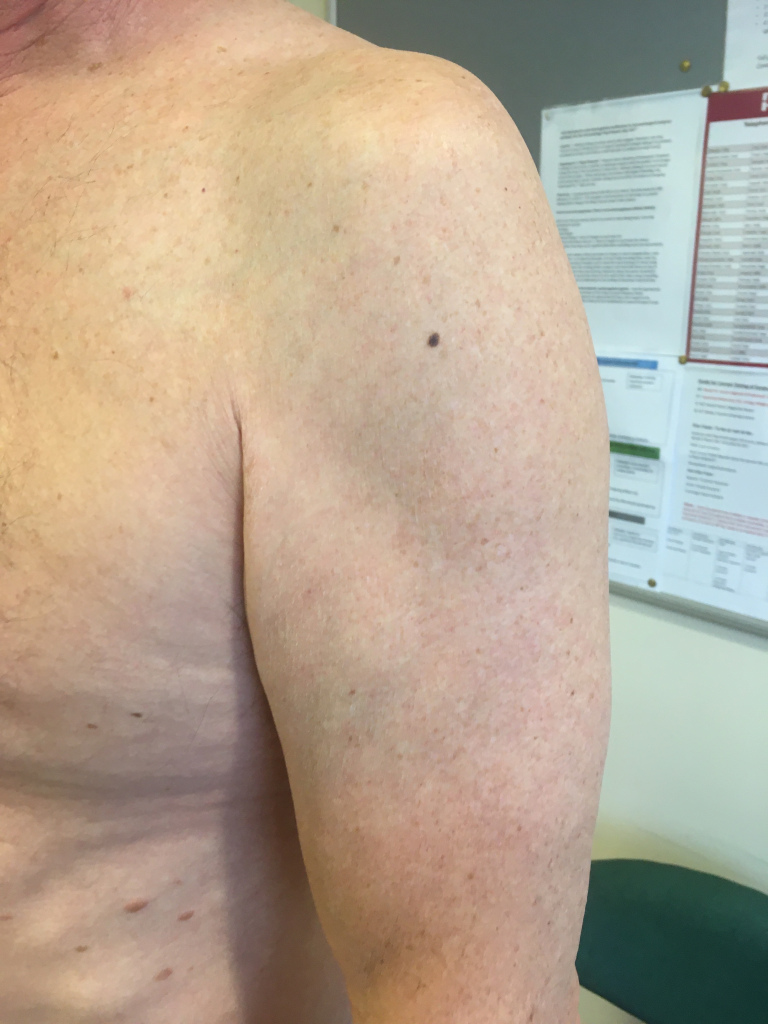
It’s not dramatic, but it stands out, so it needs a closer look.
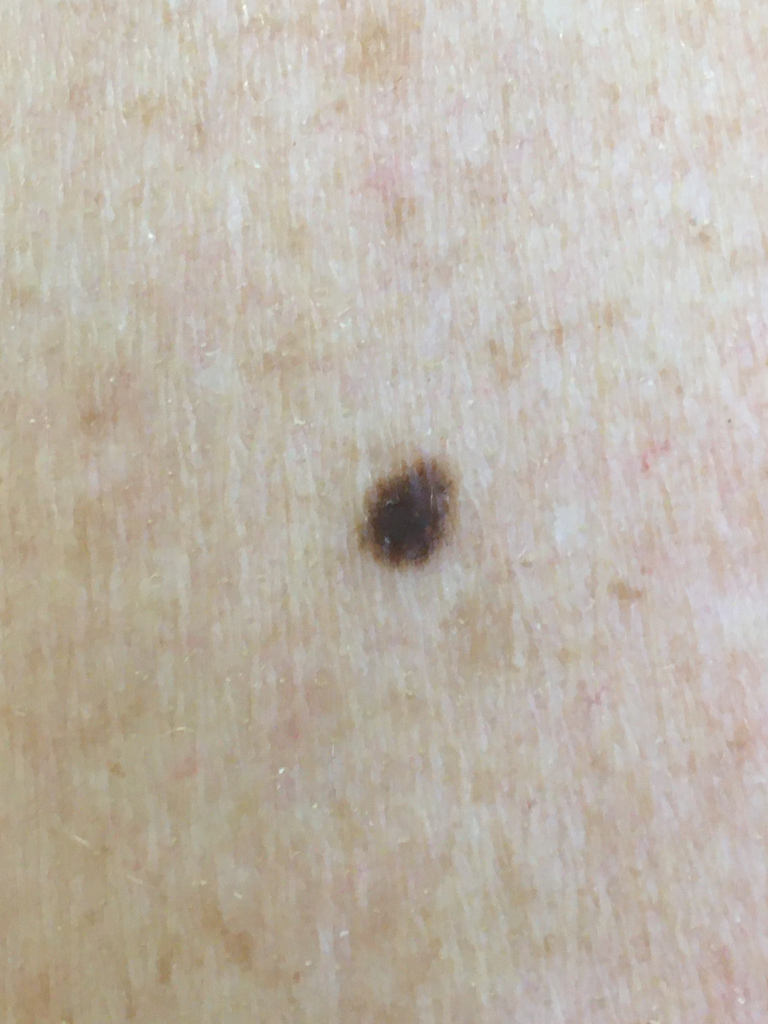
Dark, slightly irregular. Needs a closer look.
Dermoscopy reveals no chaos, clues to benignity, no melanoma clues.
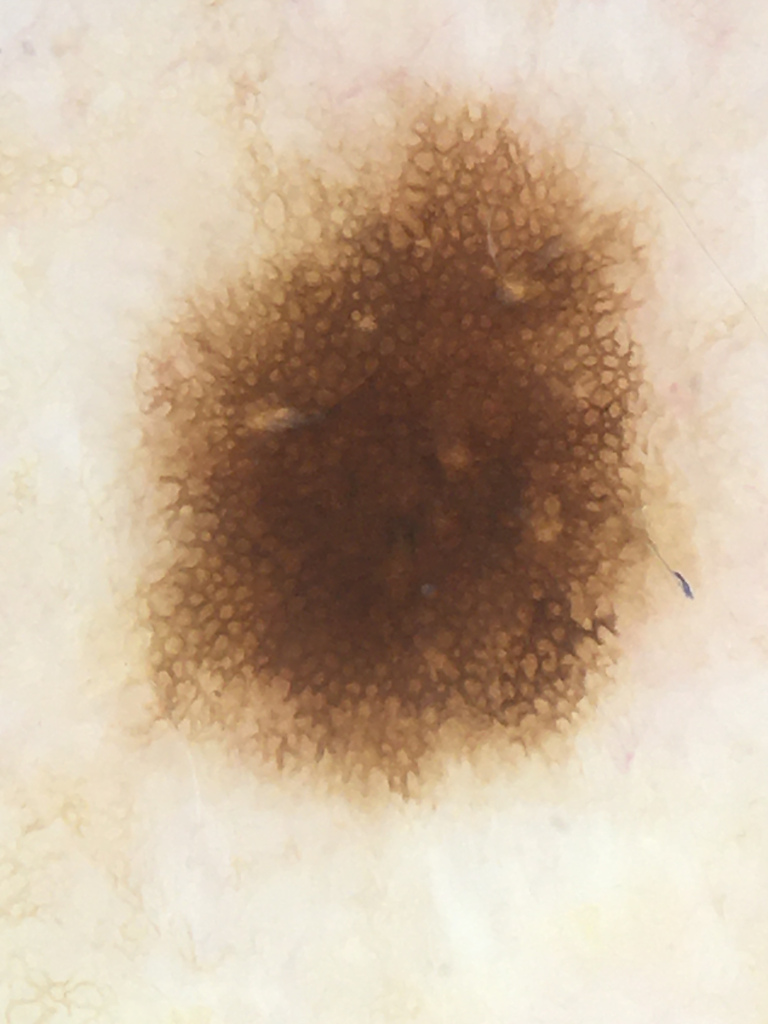
This mole is dark brown with two patterns arranged concentrically (featureless centre, reticular lines in the periphery which fade out evenly all round. We also see several small pale areas which represents perifollicular hypo pigmentation. This is of no significance. The overall appearance is highly symmetrical, a slight irregularity of shape means nothing.
Lesion was not excised. The beginner with Dermoscopy should get a book, attend courses and use the web, but should then apply the dermoscope to hundreds and thousands of lesions to ‘train your brain’ to recognize the range of normal naevi…
View original post 4 more words
I’ve just added some mental health resources to the Resources tab to try & build up a reference list of self-help tools. I hope to continue to add to this including mini-reviews of apps for helping with mental health issues.
A simple lesion looking fairly innocuous but not so on dermoscopy. When I looked at this, my first thought was an ugly duckling which always raises suspicion. Another useful post from Stephen’s blog.
This lesion appeared on a holiday photo from 2 years ago. It had got a bit bigger since then. It wasn’t itching or bleeding, and as you can see does not look very dramatic to the naked eye.
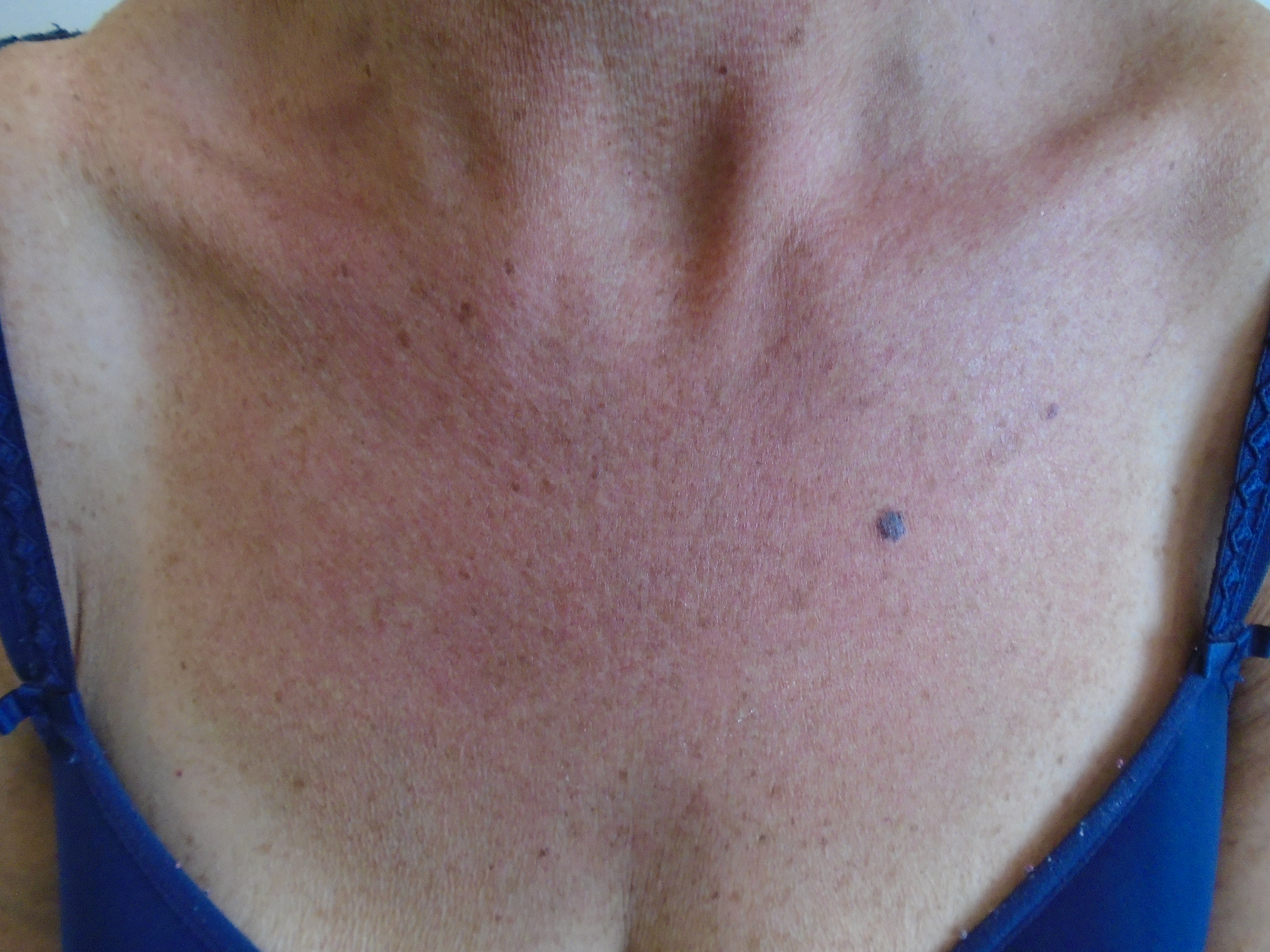
When the dermatoscope is applied, the appearance changes radically.
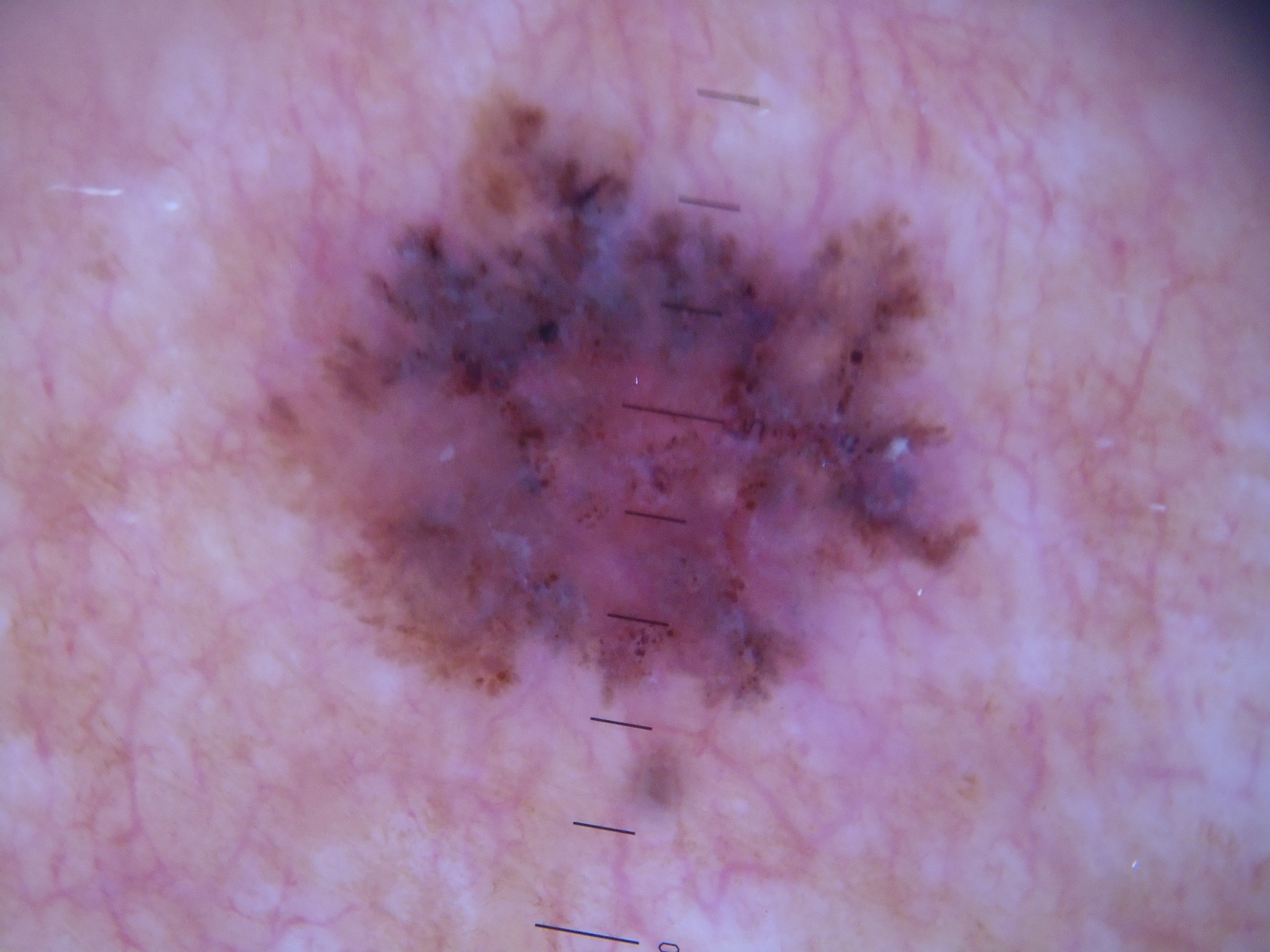
Using the ‘chaos and clues’ algorithm this is clearly chaotic. As I often say to learners in my clinic, even if you cannot put a name to the structures seen through the dermatoscope, you can count the number of structures and clearly there are many structures here. Chaos on dermoscopy is defined as multiple colours, multiple structures, and lack of symmetry.
I can see 4 four colours (brown, blue, red, black) arranged asymmetrically, plus irregular dots and clods, featureless blue and red areas, and angulated lines (slightly easier to see if you squint at the picture). Too many colours, too many structures.
The…
View original post 21 more words


