I’ve just added some mental health resources to the Resources tab to try & build up a reference list of self-help tools. I hope to continue to add to this including mini-reviews of apps for helping with mental health issues.
Author: Antony Willman
-
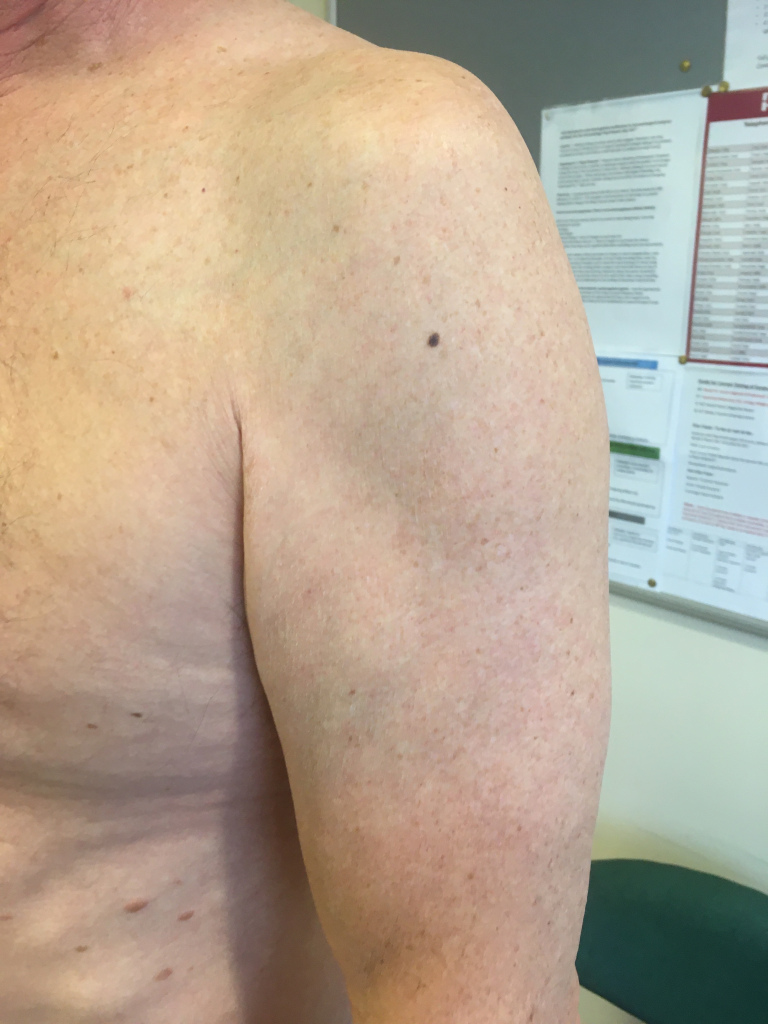
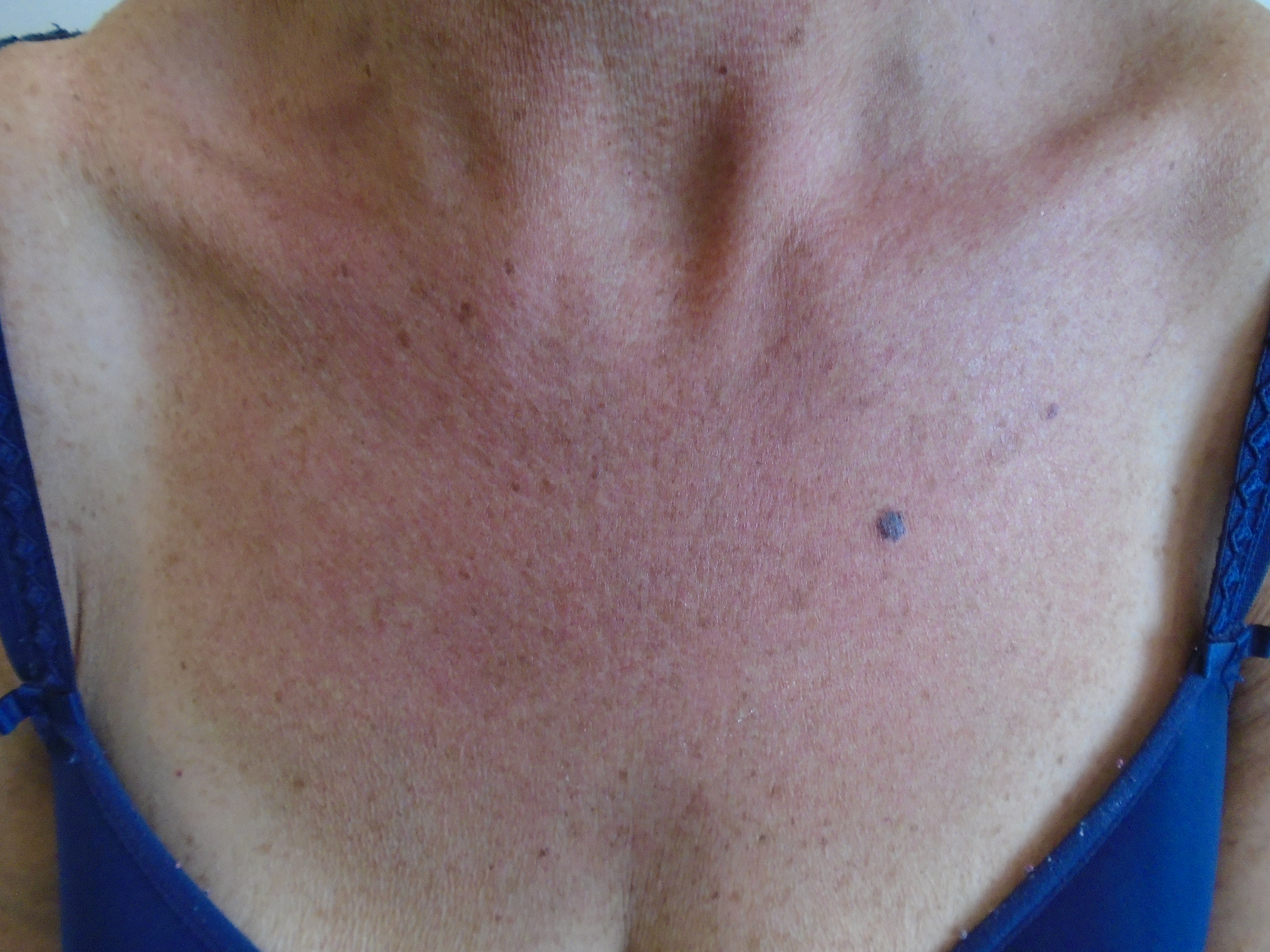
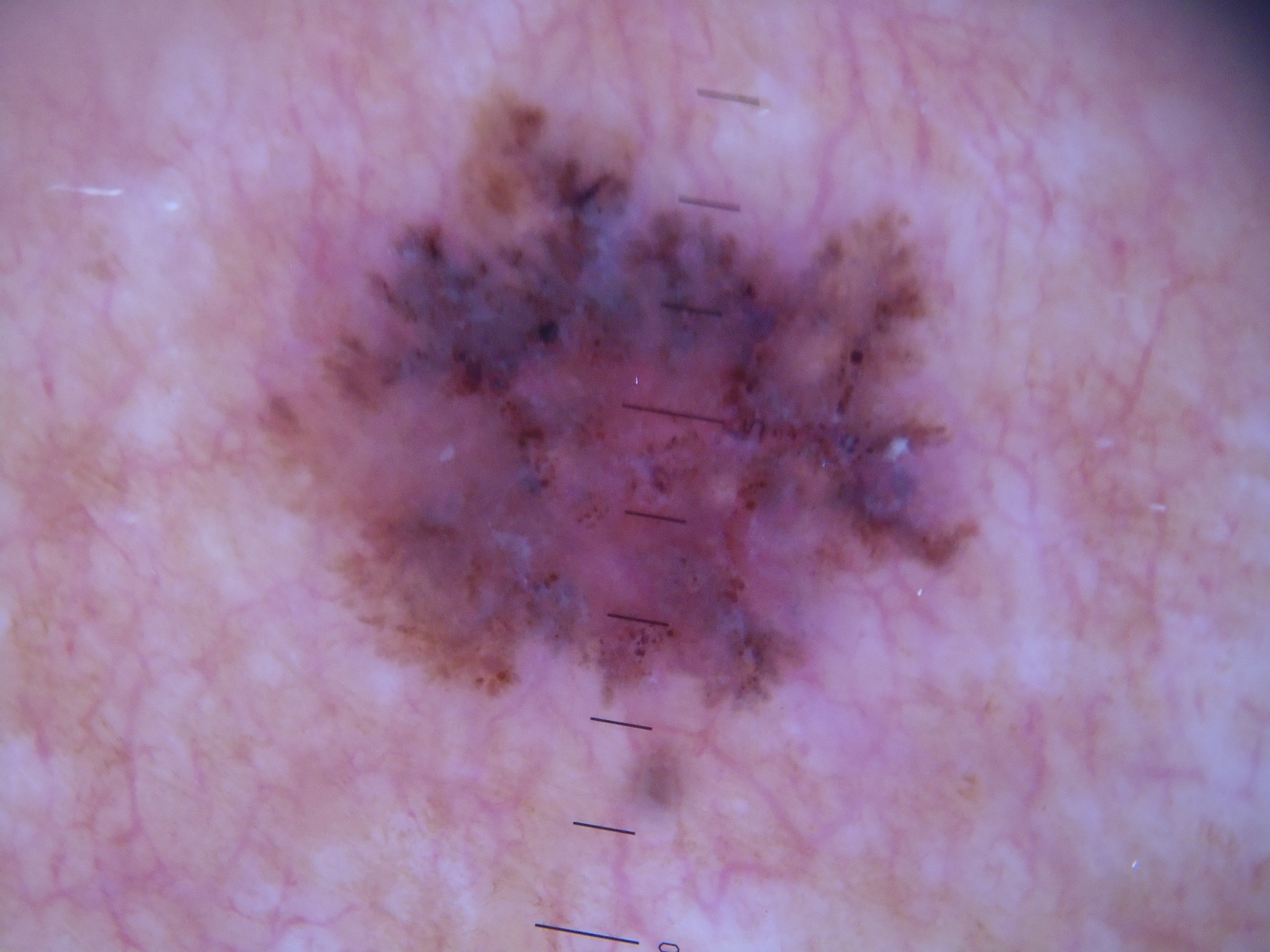
Funny looking mole on the chest
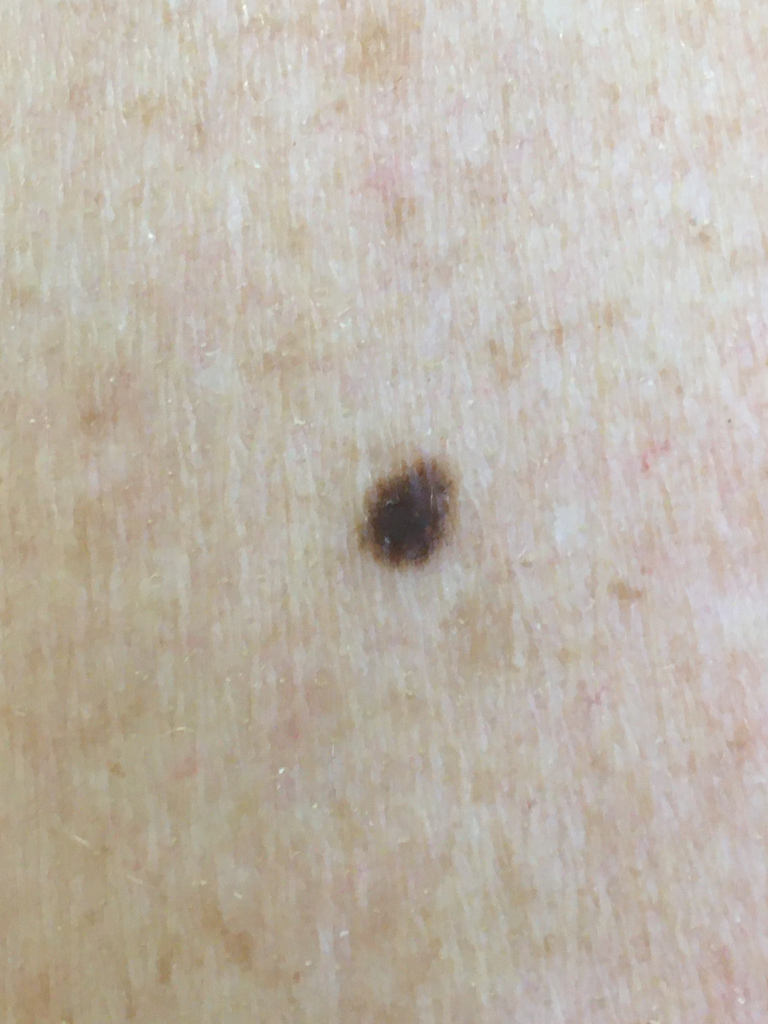
A simple lesion looking fairly innocuous but not so on dermoscopy. When I looked at this, my first thought was an ugly duckling which always raises suspicion. Another useful post from Stephen’s blog.
This lesion appeared on a holiday photo from 2 years ago. It had got a bit bigger since then. It wasn’t itching or bleeding, and as you can see does not look very dramatic to the naked eye.

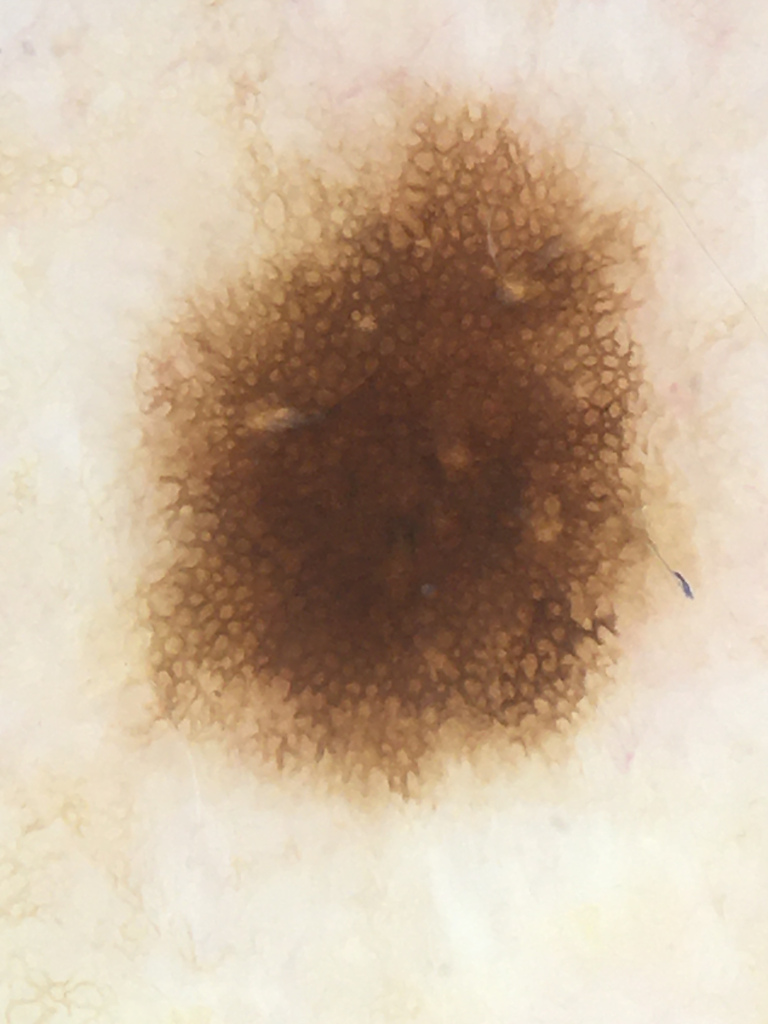
When the dermatoscope is applied, the appearance changes radically.

Using the ‘chaos and clues’ algorithm this is clearly chaotic. As I often say to learners in my clinic, even if you cannot put a name to the structures seen through the dermatoscope, you can count the number of structures and clearly there are many structures here. Chaos on dermoscopy is defined as multiple colours, multiple structures, and lack of symmetry.
I can see 4 four colours (brown, blue, red, black) arranged asymmetrically, plus irregular dots and clods, featureless blue and red areas, and angulated lines (slightly easier to see if you squint at the picture). Too many colours, too many structures.
The…
View original post 21 more words
-
Mental Health and Self-Harm pt 2
No sooner had I shared the young persons mental health links, a friend & colleague sent me her far more comprehensive list. I will eventually get round to putting a page in my resources but I have also uploaded a file with the hyperlinks on which you can download. It is here: 20190301-adult mh and I hope it is useful.
-
Mental Health and Self-Harm in Young People
I just added a new page to my resources. I received a letter from CAMHS today with some excellent links to various tools and information leaflets for young people, parents, carers and professionals. I’ve put these on a page and I hope it will be of use to people. The page is currently unformatted but the hyperlinks all work (I think). I will correct the formatting in due course as it upsets my obsessive nature!
-
Improvements in Stress, Affect, and Irritability Following Brief Use of a Mindfulness-based Smartphone App: A Randomized Controlled Trial – Economides et al, 2018
Available here – full text.
One area which I reviewed as part of my foundation module in pain was Mindfulness and Mindfulness-Based Stress Reduction (MBSR) to see if there was any benefit for chronic pain sufferers. From what I found in a number of papers I reviewed was that pain scores do not change but acceptance of chronic pain improves. Since reading about this, it is something I have mentioned to my patients as an option, or at least to investigate it. I always add the caveat ‘it is not for everyone’ but a surprising number of the young soldiers I see with pain (usually musculoskeletal or urological) engage with it. I reviewed one paper which looked specifically at Headspace (as one of the smartphone app market leaders). This was an RCT of Head Space, where patients were randomised to either the app or active control, to see if Head Space was superior (Economides et al., 2018). My non-expert critical ‘take’ on the paper is summarised below. This study used validated outcome measures which demonstrated statistically improved scores in measures of irritability & anxiety.
Aim / Type of study An RCT comparing Mindfulness to an active control. Methods A 3rd party recruiting agency (https://www.findparticipants.com) was used to recruit participants. They did NOT have chronic pain and were naïve to both meditation, mindfulness and the Headspace app. They had no psychological illness. They had to have access to a smartphone. Using a statistical approach, 52 participants were required to achieve significance at the 0.05% level. The Headspace meditation mindfulness app was compared against a control group using Headspace audiobook. The intervention group (N=41) was exposed to the first 10 sessions of 10-minute sessions delivered by the Headspace app. The control (N=28) was 10 sessions of 10 minutes of excerpts from a Mindfulness & Meditation audiobook. To closely match the intervention, the audiobook was narrated by the same author in a similar manner. Thus, the only difference between the two groups was the content.
There were 4 outcome measures: Stress Overload Scale (SOS) – personal vulnerability and event load, Scale of Positive and Negative Experience (SPANE) and Brief Irritability Test (BITe). These were assessed by all participants in both groups and paired T-tests were undertaken between them. Dropouts were included in an intention to treat analysis.
The outcome measures were all reductions in the 4 measures from baseline. The reduction in scores in the two groups were assessed by an Analysis of Variance test (ANOVA) as well as post hoc t-tests to further characterise differences. Intention to treat analysis was also included.
Results / Data In two of the outcome measures (SOS event load and SPANE) there was significant difference between the groups favouring Head Space (P<=0.01). SOS personal vulnerability was also different between the groups again favouring Head Space (P=<=0.05). There was no difference in the SOS Personal Vulnerability score between the two groups (P=0.09). Comments Whilst the size of the groups was different (41 in Headspace vs 28 in Audiobook), they were broadly similar demographically. There were more females in the Headspace group and the percentage who agreed or strongly agreed meditation could be beneficial was higher (70.8% vs 57.2%), although the authors comment that demographics were not significantly different (x2 test >0.05). After randomisation and allocation but before baseline assessment, a much higher number of audiobook participants dropped out (48 vs 33) resulting in a smaller group. The outcome measures were scores on validated questionnaires with good internal consistency. All the tests have good test re-test reliability bar the BITe which has not been determined yet. The participants were randomised by a rigorous approach and blinded to the intervention they were receiving but it is difficult to ascertain if the reviewers were blinded. The study was all done on-line and were e-mailed the voucher code which restricted their access to the intervention or control content. By assumption, this is a single-blinded study as the researcher would have known who was receiving the code.
In terms of the strengths and weaknesses of the study, two of the researchers were involved in the development of the Head Space app. The possibility of funding bias is raised by this given a potential conflict of interest with a commercial product. There are three other areas for critical review in the context of the population researched:
Area of Reflection Implication for chronic pain patients The patients involved did not have chronic pain. The findings of this study may not be generalisable. The sample may not represent the general population. In both groups, those who agreed or strongly agreed meditation can be beneficial is over 50% (29/41 and 16/28 for Head Space and control respectively). This compares to a large survey which found a lifetime prevalence of 5.2% of the use of meditation for health reasons (Cramer et al., 2016). Patients who have previously done well with psychoeducational pain courses (ie an acceptance of MBSR) may well do better with Mindfulness. The demographics of the sample cohort are predominantly white/Caucasian and college/university education. All three of these reduce the applicability of this study to the wider population, a valid point raised by the researchers when assessing the strengths/weakness of their work. Again the generalisability may be challenged. The Army has a mixed ethnic demography but is still predominantly Caucasian. Future work I am considering is to see if commonwealth soldiers with chronic pain can get similar benefits. To summarise, MBSR can improve affect and reduce depression scores but may not significantly reduce pain scores. It can be delivered successfully via a smartphone app. It is a low-risk intervention which may have some positive benefits. This paper is a small snapshot with some methodological weaknesses, but it otherwise seems well constructed and I liked the active control. To the uninitiated who had not used MBSR before, it seems like a good comparator. It has certainly prompted some discussion amongst our primary care team about the role of apps in the rehabilitation of our injured soldiers. We hope to look at two or three of these (including Headspace) in this context and get both objective results as well as the qualitative opinion of what the soldier actually thought.
CRAMER, H., HALL, H., LEACH, M., FRAWLEY, J., ZHANG, Y., LEUNG, B., ADAMS, J. & LAUCHE, R. 2016. Prevalence, patterns, and predictors of meditation use among US adults: a nationally representative survey. Scientific reports,6,36760.
ECONOMIDES, M., MARTMAN, J., BELL, M. J. & SANDERSON, B. 2018. Improvements in Stress, Affect, and Irritability Following Brief Use of a Mindfulness-based Smartphone App: A Randomized Controlled Trial.Mindfulness,1-10.
-
Multidisciplinary Chronic Pain PBSGL
Despite studying for a foundation module in pain management, I learnt an awful lot. It was great other members found the biopsychosocial model of chronic pain so useful. It reinforced what I have been learning. I shared some of the resources which are available for general access which I think is essential as we all want to improve patient care. Right at the end, the physiotherapist who attended this session mentioned establishing a chronic pain clinic with education and paced activities at its heart. I am very keen to get involved so volunteered to help. I hope to include neuropathy patients (non-freezing cold injury). My own hypothesis is if we can normalise what these individuals are complaining of, give them a label of chronic pain (albeit of neuropathic origin) and get them to engage with other chronic pain sufferers, I think they will do better. They will feel engaged and empowered.
Interestingly and once again, we had a physiotherapist attend as an observer but who also played an active part. He is about to undertake a dissertation as part of an MSc in pain management. In the end, he was one of the group, contributing and discussing like the rest of us. Having a healthcare professional from other disciplines in a small group learning environment represents a wonderful opportunity. There is the possibility of funding for a more widespread study into PBSGL within Defence Primary Healthcare and I hope we can extend it to our physiotherapy and nursing colleagues.
In the end, we summarised what we had learned and shared the resources. Here are a few & I hope you find them useful:
Palouse mindfulness – I shared this after I discovered about it at a psychiatry course. Well worth a look.
Head Space as the go-to app (based on evidence, albeit one study, small & undertaken by the app authors!). Also, highest rated mindfulness app according to another paper using the MARS scale. I should add, there doesn’t appear to be hard evidence that Mindfulness improves chronic pain. It enhances acceptability but not intensity, probably by enhancing affective elements.
‘Struggling to be me‘ video (plus the healthcare professional opinions – a real eye-opener). Based on a BJGP paper exploring patients experiences of living with chronic pain.
www.paincommunitycentre.org – requires registration but a fantastic resource for chronic pain presentations and educational material. UPDATE Unfortunately this website was discontinued on Feb 19. However, a lot of the talks are available at the Vimeo site.
pain-ed.com – not thoroughly evaluated but looks good.
The pain team page at the University College Hospital London – some good videos for patients who want to learn more.
Understanding pain in less than 5 minutes – YouTube video
Lower Back Pain by DocMikeEvans – YouTube video
Am I safe to move – Audio lecture by Prof Lorimer Moseley on pain
-
PBSGL within an interprofessional group of doctors.
A belated post about my article for the Journal of the Royal Army Medical Corps. It is available here but alas not in full text. Indeed I am not sure I am allowed to link to a full-text version as that would make it open access and that in turn makes it expensive to publish.
Anyhow, it was published, and I am clearly delighted that at the ripe old age of 50, I have discovered chapter 3 (or 4) of my career. I found the whole process of designing the questionnaire, setting it up on a commercial survey website, seeing the responses come in, importing into Nvivo and doing the thematic analysis fascinating. After this, relating it to what I had read and understood from the literature, what was replicated, what was new. I was enthralled, and I can see what makes research so exciting (although this wasn’t research, it was a service evaluation).
I hope I can do some more work on PBSGL and its impact. Indeed the next area is to incorporate our Practice Nurse cadre into it, so we have a genuinely interprofessional demographic.
I think the next areas I am going to divert my attention to are how a GP Registrar and/or a GP answers a clinical question (in response to a DEN) and an exploration of the impact of NFCI on a soldier. Two completely separate things but also aligning with my day job. It means more literature searches and more protocol writing, but I think both areas will reveal some rich data and stimulate debate. My hypotheses (if one can have one when undertaking a ‘service evaluation’) are that the former will throw up some concerns and under-utilisation of Web 2.0/SMS in answering clinical questions. I think the latter will demonstrate a significant psychological overlay in neuropathy (NFCI) with a subsequent effect on ADLs, and that the first line of treatment should be a set number of early CBT/psychological interventions to mitigate against longer-term disability.
-
Chronic non-freezing cold injury results in neuropathic pain due to a sensory neuropathy
Perhaps not a hot topic for NHS General Practice but as we approach another winter, this journal article is relevant for any healthcare professionals involved in the care of soldiers.
The original article is here (I want to highlight the use of a DN4 neuropathic pain scoring chart if you are assessing a patient with suspected neuropathic pain).
My own experience with managing this very difficult condition is that it is frustrating for both the patient and doctor. Soldiers of Afro-Caribbean origin are far more likely to suffer from NFCI (30x by some estimates) and they are more prone to the side effects of neuropathic drugs, especially amitriptyline (totally anecdotal evidence).
In summary the article confirms this is a neuropathy confirmed by skin biopsy. Quantitative sensory testing is also helpful. Because the nerves are small sensory fibres, detection by nerve conduction studies is not always accurate. It goes into quite some detail about the process (it is a PhD project).
For me the main message is this is a real phenomenon with physical changes. In the study, 35% were medically discharged from the Forces and of these, over 50% were unemployed. This is pretty horrendous and re-iterates that NFCI can be a chronic & disabling condition.
My own management involves adequate protection (motorcycling warmed gloves are useful as are silk liners), neuropathic agents, simple pain relief (opiates are occasionally helpful funnily enough) and a cognitive approach to pain. The latter is especially important given that employment may be difficult if working outdoors is impossible for 4 months of the year.